

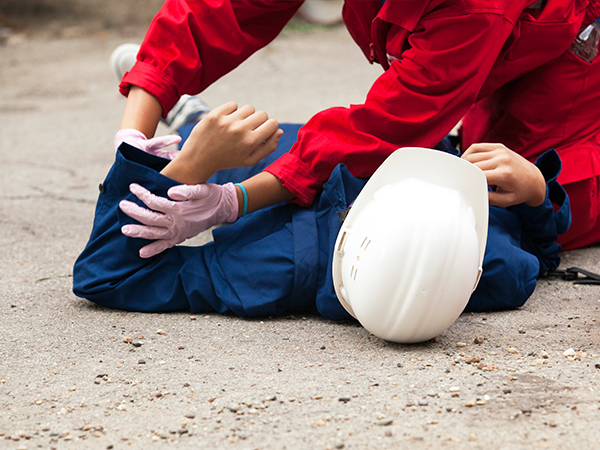
1) Understand the role and responsibilities of a first aider The role of a first aider
2) Be able to assess an incident. Personal safety – Call for help
3) Be able to manage an unresponsive casualty who is breathing normally. Level of consciousness – Who to Place in the recovery position, an who not to- Place someone in the recovery position, practice
4) Be able to manage an unresponsive casualty who is not breathing normally. Open an airway – Check breathing – Cardio Pulmonary Resuscitation – Cardio Pulmonary Resuscitation practice
5) Be able to recognise and assist a casualty who is choking. Describe how to identify a casualty with a: *partially blocked airway *completely blocked airway – Administer first aid to a casualty who is choking.
6) Be able to manage a casualty with external bleeding. Identify the types of external bleeding. – Control external bleeding. Control external bleeding practice
7)Be able to manage a casualty who is in shock. Recognise shock. – Administer first aid to a casualty who is in shock.
8) Be able to recognize a serius illness Signs and Symptoms for serious illness – Recognize and manage Breathing Difficulty or Shortness of Breath – Recognize and manage Pain, Servere Presure or Discomfort in Chest – Recognize and manage Severe Abdominal Pain – Recognize and manage Altered Level of Responsiveness
9) Be able to administer First Aid to a casualty with suspected head, neck and spinal injuries. Identify a major mechanism of injury – Identify and manage a Head injury – Identify and manage a Neck injury – Identify and manage a spinal injury – Identify and manage a Deformed Limb
10) Be able to administer First Aid to a casualty with burns and scalds. Be able to administer First Aid to a casualty with burns and scalds. – Administer first aid for burns involving: *dry heat *wet heat *electricity *chemicals
11) Be able to manage other conditions Managing faint – Administer first aid to a casualty with minor burns – Administer first aid to a casualty with convulsions
12) Understand the ongoing assessment Perform an ongoing assesment
Certification Period 2 Years
Course Length 12 Hours
Student / Instructor Ratio (Recommended/Maximum) 6:1 / 12:1
Student / Equipment Ratio (Recommended/Maximum) 1:1 / 3:1
_____________________________________
Class Delivery Types

Traditional Classroom
Blended Learning with In-Person, Instructor-Led Skills Session